| Applying Indian Rhythms 2 |
A look at the Rhythms of
South India and how to apply them musically.
The more concepts and methods we can employ regarding the development of
thematic material, the Wider our creative vision of any percussion
repertoire will become. With systematic approaches that derive new
material from material we already have at our fingertips our own
personal repertoire will have lots of immediate ways to develop. Indian
musicians have for centuries focused on maximizing utilization of every
simple phrase learnt, building them up into more complex ideas. Both in
the north and the south of India there are many forms of rhythm theme
development employed, and we are going to look at one from the south
which can be particularly useful in developing solo concepts.
Let's begin by taking a very simple phrase six eighth notes in length.
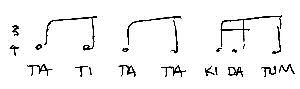
EXAMPLE 1
For now, we will recite the
syllables and clap a quarter note pulse. Abstract as this may seem, it
is actually extremely useful in getting more familiar with odd rhythmic
phrases particularly when a specific set of syllables ('bols' in Hindi,
the translation of 'bolo` being 'word') is regularly used for a
particular length phrase. The object of this article will be to create
an odd and interesting four-bar unit using this simple phrase and the
South Indian system of reducing the length of the phrases.
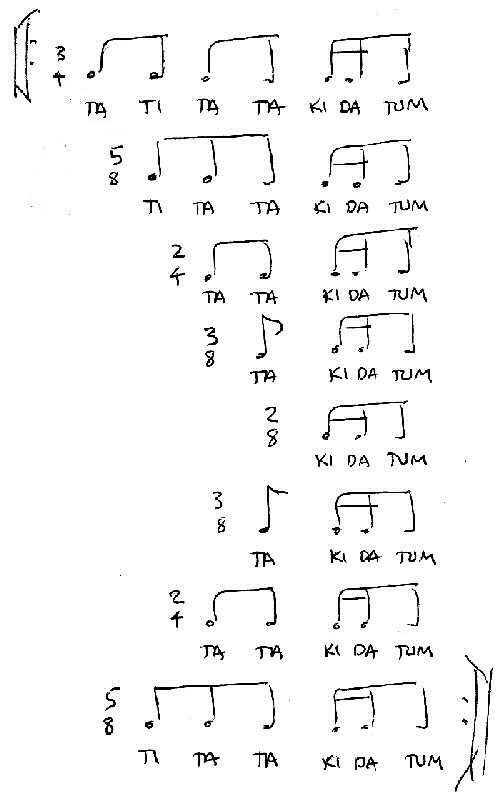
To begin with we will chop off one-eighth note from the beginning of the
phrase each time it is repeated until it is reduced to one-quarter note
in length. Then we will go through the opposite procedure and add one
eighth note each time. What we will end up with is four bars of 4/4.
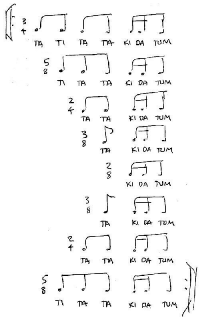
EXAMPLE 2 Click to
enlarge

As you can see, Example 2 shows each
phrase individually, one after the other, the sum total of which fits
into 4/4. Example 3 shows the whole piece represented in 4/4, with the
quarter note clap and the first note of each separate phrase accented to
highlight the off-beat rhythmic effect.
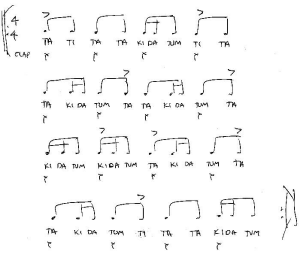
EXAMPLE 3 Click to enlarge
The next step will be to find a phrase on
the kit which will fit the contours of theme (the 3/4 bar), and also be
suitable to reduce by subtraction. Bearing in mind we were angling this
towards solo development, try out Example 4. Keeping time with the left
foot will be somewhat easier at this point than it will when we begin to
reduce the phrase over the bar lines.
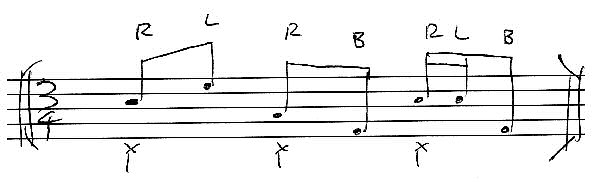
EXAMPLE 4
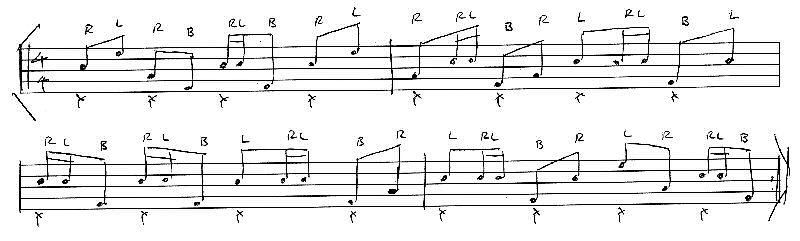
Now, with this in mind we can go on to
the whole four bar pattern. I've slightly adapted some of the sticking’s
in a way which makes sense to me lyrically. However, the rhythmic
contours remain the same.
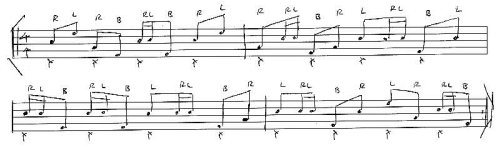
EXAMPLE 5 Click to enlarge
It's amazing how much can stem from one
simple 3/4 bar. It is also interesting to note that what you're
grappling with is not the technicality of a seemingly straightforward
phrase, but rather its application in time. Let's take another 3/4
phrase, based more along the lines of a kit rhythm. The rhythmic contour
is slightly different from Example l

EXAMPLE 6
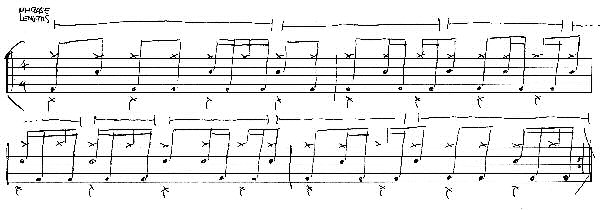
This is not a particularly complex
rhythmic idea but it does throw up some interesting shapes when the
reduction system is applied. The phrase lengths are indicated in the
next example.
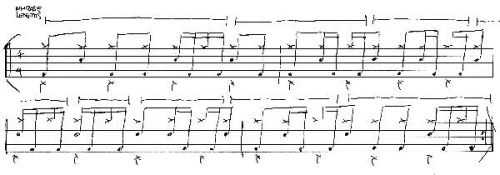
EXAMPLE 7 Click to
enlarge
This final example only makes sense when
you think of all the separate phrases whilst playing it. To play it
'straight' in a 4/4 feeling loses the feel of the composite phrases. One
final note. The important thing about these articles is the concept and
not the exact reproduction of what is written. It would be more
advantageous to take phrases you are already familiar with and adapt
them into the conceptual templates of these articles. The greatest thing
any creative drummer can have is the ability to sound like him or
herself without internal conflict.

|